Roof Insulation in El Segundo, CA
Expert Roof Insulation in El Segundo, CA — Storm-Tested, Warranty-Backed
Need roof insulation in El Segundo, CA? Cool Zone Insulation offers spray foam, blown-in & attic insulation. Free estimates — call (310) 861-9135 today.
Roof insulation is the thermal and moisture barrier installed between your living space and the elements above — a critical system in any home or commercial property. In El Segundo, CA, where marine layer fog rolls in from the Pacific Ocean daily, coastal humidity fluctuates year-round, and aviation-related heat from Los Angeles International Airport (LAX) creates unique microclimatic pressures, proper roof insulation is not optional — it is essential infrastructure.
Cool Zone Insulation provides professional roof insulation services tailored specifically to the coastal South Bay environment. Our team understands how El Segundo’s salt-air exposure, dense residential neighborhoods like the original Standard Oil tract homes, and proximity to LAX flight paths all influence insulation performance, longevity, and material selection. Whether you own a post-war bungalow, a mid-century commercial building, or a modern apartment complex, we deliver insulation solutions engineered for this specific ZIP code — 90245 — and the climate forces that shape it every single day.
Understanding Roof Insulation in El Segundo, CA
Roof insulation refers to any material system installed at the roofline — either at the roof deck level or at the attic floor — that slows the transfer of heat between the interior of a building and the exterior environment. The goal is thermal resistance, measured in R-values, which quantify how effectively a material resists heat flow. The higher the R-value, the better the insulation performance.
Historically, roof insulation in California coastal communities like El Segundo was minimal by design. Homes built between the 1920s and 1960s — which make up a significant portion of El Segundo’s residential housing stock — relied on natural ventilation and mild temperatures to maintain comfort. Many of these structures were constructed during the early development of El Segundo by Standard Oil Company of California, which founded the city in 1911. Workers’ cottages, craftsman bungalows, and small commercial storefronts from this era were built before modern insulation codes existed, leaving them severely under-insulated by today’s standards.
Read moreShow less
California’s Title 24 Building Energy Efficiency Standards, first adopted in 1978 and updated regularly through the most recent 2022 code cycle, now require roof assemblies to meet minimum R-values depending on climate zone. El Segundo falls within California Climate Zone 8, which mandates a minimum R-38 for attic insulation in residential construction. Many existing homes in El Segundo fall well below this threshold, often testing at R-11 or lower — less than 30% of the required performance level.
Building types in El Segundo that commonly require roof insulation upgrades include:
- Pre-war craftsman and bungalow homes (1911–1940) near Richmond Street and Standard Street corridors
- Post-WWII tract housing (1945–1965) in the southeast residential grid
- Mid-century commercial and light industrial properties along Sepulveda Boulevard
- Modern multi-family residential developments near Grand Avenue and El Segundo Boulevard
- Aerospace-adjacent office and warehouse facilities near Douglas Street
Roof insulation is not a one-size-fits-all product. The correct solution depends on roof geometry, existing structural members, ventilation requirements, moisture exposure levels, and the specific thermal demands of the building’s occupants. Cool Zone Insulation evaluates all of these factors before recommending any approach.
Why Roof Insulation Is Needed in El Segundo, CA
The Marine Layer Effect
El Segundo experiences one of the most persistent marine layer climates in all of Southern California. The National Weather Service categorizes El Segundo within the coastal zone where morning low clouds and fog — locally called “June Gloom,” though it persists well into August and September — suppress daytime high temperatures while simultaneously driving relative humidity above 80% between the hours of midnight and 10 a.m. This combination of cool, moisture-laden air pressing against warmer interior spaces creates ideal conditions for condensation inside poorly insulated roof assemblies.
When warm interior air meets cold roof decking saturated by marine layer humidity, condensation forms on the underside of the roof sheathing. Over time, this moisture causes wood rot in rafters and sheathing, mold growth in attic cavities, and degradation of any existing fiberglass batt insulation. Homes in El Segundo’s northwest quadrant — particularly those within four blocks of the beach bluff along Vista del Mar — are most acutely affected, where salt-laden moisture accelerates corrosion and material breakdown at rates up to 40% faster than inland communities like Torrance or Gardena.
LAX Flight Path Thermal Loading
El Segundo sits directly beneath the primary northern departure and arrival flight paths for Los Angeles International Airport. Aircraft operating at altitudes between 500 and 3,000 feet generate measurable radiant heat and noise vibration. While the thermal contribution is secondary to solar gain, noise vibration from repeated jet overflight — occurring every 90 seconds during peak operational hours — can gradually loosen poorly adhered insulation batts and create air gaps in older blown-in installations. Residents near Douglas Street and the El Segundo Boulevard corridor report the highest overflight density.
Salt Air Corrosion and Material Degradation
El Segundo’s average distance from the Pacific shoreline within its residential grid is approximately 0.8 miles. At this proximity, salt particulate deposition rates on roofing materials are significant. Salt crystals infiltrate roofing assemblies through ventilation gaps and deteriorate metal components, vapor barriers, and even the kraft paper facing on fiberglass batts. The California Coastal Commission’s 2019 Coastal Erosion and Structural Impact Report identified communities within one mile of the shoreline — including El Segundo — as facing accelerated building envelope degradation requiring more frequent inspection and maintenance cycles than inland ZIP codes.
California Climate Zone 8 Heat Gain
Despite its coastal moderation, El Segundo still experiences summer dry periods where interior temperatures can reach 85°F to 92°F in poorly insulated attic spaces, even when exterior ambient temperatures hover near 72°F. Attics with no insulation or severely degraded insulation act as heat reservoirs that radiate into living spaces, increasing cooling loads and utility costs. Southern California Edison data for the 90245 ZIP code indicates that residential electricity consumption spikes an average of 34% during July and August heat events, with a significant portion attributed to air conditioning demand driven by inadequate attic and roof insulation.
Free, no-obligation estimates
Talk to Cool Zone Insulation
Tell us what you need and we’ll take it from there.
Signs You Need Roof Insulation in El Segundo
Energy Performance Warning Signs
- Monthly electricity bills exceeding $180–$220 during summer months for a standard El Segundo 1,200–1,500 sq ft home
- HVAC system running continuously during afternoon hours without reaching target thermostat temperature
- Noticeable temperature difference — greater than 5°F — between upper floor rooms and lower floor rooms
Physical and Structural Symptoms
- Visible daylight through attic vents or roof deck gaps when inspecting from inside the attic
- Compressed, discolored, or water-stained fiberglass batts in attic spaces
- Dark staining or mold patches on attic-facing drywall ceilings in upstairs rooms
- Musty odors in upstairs bedrooms or hallways, particularly during morning marine layer hours
- Frost or condensation on interior ceiling surfaces during rare El Segundo cold snaps
Age-Based Urgency Indicators
- Home was built before 1980 and has never had insulation professionally assessed or replaced
- Existing blown-in insulation has settled to a depth below 10 inches (indicating R-value below R-30)
- Previous roof replacement was completed without addressing underlying attic insulation
If you recognize two or more of these signs, contact Cool Zone Insulation at (310) 861-9135 for a comprehensive roof insulation assessment before seasonal conditions worsen the underlying problem.
Roof Insulation Methods and Approaches
Blown-In Cellulose or Fiberglass
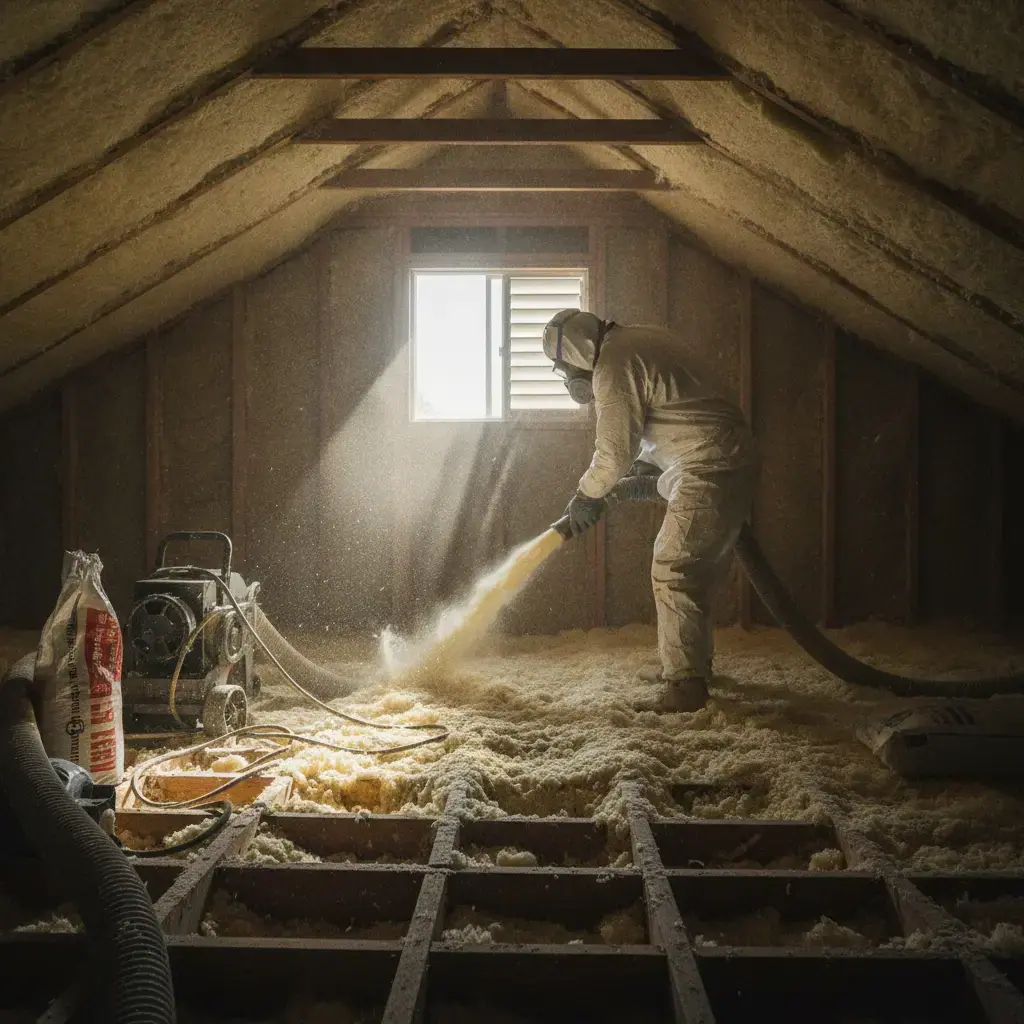
The most common solution for existing attic floor applications in El Segundo’s older residential stock. Blow-in insulation conforms to irregular joist spacing and reaches behind knee walls and into difficult corners without disturbing existing framing. Best suited for homes with accessible attic spaces and no active moisture intrusion. Achieves R-38 to R-60 depending on installed depth.
Closed-Cell Spray Foam
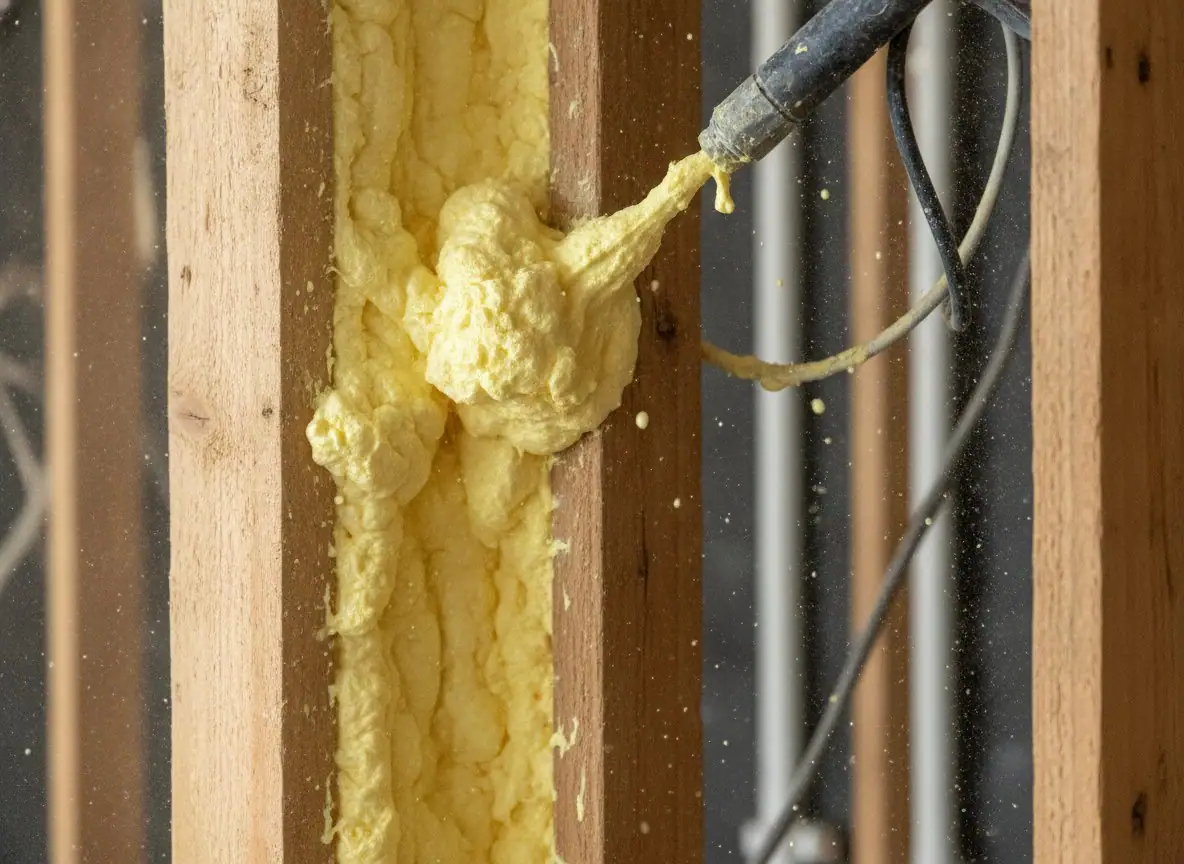
Spray foam insulation at the roof deck creates an unvented conditioned attic assembly — ideal for El Segundo properties where marine layer humidity makes traditional vented attics prone to moisture accumulation. Closed-cell foam provides R-6.5 per inch and acts as a Class II vapor retarder, protecting wood structural members from salt-air moisture infiltration. Highly recommended for properties within three blocks of the Vista del Mar coastal bluff.
Fiberglass Batt Insulation
Appropriate for new construction or during rafter bay applications in open attic assemblies. Cost-effective for straightforward installations in El Segundo’s post-WWII tract homes with standard 16-inch on-center rafter spacing. Requires careful installation to prevent compression, which degrades R-value performance significantly.
Hybrid Systems
Combining two inches of closed-cell spray foam at the roof deck (for vapor control in coastal exposure) with blown-in cellulose on the attic floor achieves both moisture protection and high R-value economically — a method Cool Zone Insulation frequently employs for El Segundo properties in the 90245 ZIP code that require both thermal and moisture performance upgrades.
Roof Insulation Cost in El Segundo, CA
Understanding the cost of roof insulation in El Segundo helps homeowners and property managers plan their investment accurately. Pricing varies based on square footage, existing conditions, material selection, and accessibility of the attic space.
Typical Price Ranges for El Segundo Properties
- Blown-in attic insulation (cellulose or fiberglass): $1.50–$2.50 per square foot installed. A typical 1,200 sq ft El Segundo bungalow attic runs $1,800–$3,000 for a complete blown-in installation to R-38.
- Closed-cell spray foam at roof deck: $3.50–$5.00 per board foot. Full unvented attic conversion for a 1,200 sq ft home typically costs $4,200–$6,500.
- Insulation removal before reinstallation: $1.00–$2.00 per square foot, adding $1,200–$2,400 for average El Segundo residential attics.
- Hybrid spray foam plus blown-in systems: $3,500–$6,000 for a complete installation on a standard South Bay single-family home.
Read moreShow less
El Segundo-Specific Cost Factors
Coastal proximity increases labor and material costs modestly — approximately 8–12% above the Los Angeles inland average — due to the need for moisture-resistant materials, more rigorous vapor control detailing, and additional air sealing at penetrations exposed to salt-air infiltration. Properties directly along Vista del Mar or within one block of the El Segundo bluff may require premium moisture-barrier products at additional cost.
Southern California Gas Company and Southern California Edison both offer rebate programs for qualifying insulation upgrades. Cool Zone Insulation can provide documentation supporting rebate applications, potentially reducing net project cost by $200–$800 depending on scope.
Call (310) 861-9135 for a free, no-obligation estimate specific to your El Segundo property.
El Segundo Neighborhoods and Service Areas We Serve
El Segundo Residential Core (90245)
The original Standard Oil worker housing grid bounded by Main Street, Sepulveda Boulevard, Imperial Highway, and Vista del Mar contains the highest concentration of pre-1940 homes in our service area. These properties almost universally require complete insulation replacement, with many containing original rock wool or horsehair insulation materials that have fully degraded over 80-plus years of coastal exposure.
Manhattan Beach
Immediately south of El Segundo along the Strand, Manhattan Beach’s premium residential stock — including the tree section east of Sepulveda and the Hill Section — features a mix of 1960s–1970s construction and modern custom builds. Older properties in the tree section frequently have compressed fiberglass batts at R-11 or below, while newer custom homes may need spray foam upgrades at crawl spaces and roof decks. Crawl space insulation is also frequently needed in hill section properties.
Hawthorne and Lawndale
These inland adjacent communities sit in a transitional climate zone where summer heat is more pronounced than on the immediate coast. Post-WWII tract homes throughout Hawthorne and Lawndale — particularly along Prairie Avenue and Inglewood Avenue corridors — experience greater temperature swings requiring R-38 to R-49 attic insulation to maintain comfort and code compliance.
We also serve Marina del Rey, Playa del Rey, Westchester, Culver City, Gardena, Hermosa Beach, Inglewood, Ladera Heights, Palos Verdes Estates, Redondo Beach, and Torrance. Call (310) 861-9135 to confirm service availability at your address.
Roof Insulation Maintenance Tips for El Segundo Homeowners
- Inspect attic depth annually: Use a ruler to spot-check blown-in insulation depth each spring. If depth has settled below 13–14 inches (indicating less than R-38), schedule a top-off appointment before summer heat season begins.
- Check attic ventilation each fall: Before marine layer season intensifies in October and November, confirm that ridge vents and soffit vents are unobstructed by debris, bird nests, or settled insulation.
- Monitor for moisture stains after fog events: Following heavy marine layer periods, inspect your attic ceiling for new dark staining — an early indicator of condensation forming on inadequately insulated roof decking.
- Seal new penetrations immediately: Any new recessed lighting, attic access hatches, or HVAC modifications must be air-sealed before El Segundo’s coastal humidity exploits the new bypass point.
- Keep attic access hatches insulated: Install a purpose-built attic stair cover rated to R-30 or higher. Uninsulated attic hatches are among the most common energy loss points in El Segundo’s older bungalow homes.
- Inspect after any roofing work: Roofers working on your El Segundo property may inadvertently damage or displace insulation. Request a post-roofing attic inspection as a standard practice.
- Address pest activity immediately: Rodents attracted by El Segundo’s coastal scrub habitat will nest in and contaminate insulation. Any sign of nesting requires professional insulation removal and replacement.
Why Choose Cool Zone Insulation for Roof Insulation in El Segundo
Cool Zone Insulation is a locally operating insulation contractor with deep roots in the South Bay coastal communities of Los Angeles County. We do not apply one-size-fits-all national franchise protocols to El Segundo properties — we understand that a home four blocks from the Pacific Ocean on Bayview Drive faces fundamentally different insulation challenges than a property in Gardena or Torrance, and we engineer our solutions accordingly.
Our technicians are specifically trained in coastal climate insulation applications, including marine layer moisture management, salt-air vapor barrier selection, and the California Title 24 Climate Zone 8 compliance requirements that govern El Segundo construction. We use thermal imaging equipment on every assessment, provide written R-value documentation after every installation, and carry all required California contractor insurance.
Read moreShow less
We serve the full South Bay service area including El Segundo, Manhattan Beach, Hermosa Beach, Redondo Beach, Hawthorne, Lawndale, Inglewood, Torrance, Palos Verdes Estates, Culver City, Westchester, Playa del Rey, Marina del Rey, Gardena, and Ladera Heights.
Call (310) 861-9135 to speak with a local El Segundo insulation specialist today.
FAQ
Frequently Asked Questions About Roof Insulation in El Segundo, CA
How much does roof insulation cost in El Segundo, CA?
Costs in El Segundo typically range from $1,800–$3,000 for a standard blown-in attic insulation installation on a 1,200 sq ft home, rising to $4,200–$6,500 for closed-cell spray foam at the roof deck. Coastal location adds approximately 8–12% to standard LA Basin pricing due to moisture-resistant material requirements. Call (310) 861-9135 for a free property-specific estimate.
What R-value is required for roof insulation in El Segundo?
El Segundo falls within California Energy Code Climate Zone 8, which requires a minimum of R-38 for attic insulation in residential buildings. New construction and significant renovation projects must comply; existing homes are not retroactively mandated but benefit substantially from upgrading to R-38 or higher for energy savings and comfort.
How long does a roof insulation installation take in El Segundo?
Most standard El Segundo residential attic insulation projects are completed within one to two days. If insulation removal is required — common in older Standard Oil-era homes — add one to two days. Larger multi-family or commercial properties may require three to five days for complete installation.
Is spray foam or blown-in insulation better for El Segundo’s coastal climate?
For properties within three to four blocks of the El Segundo coastline or the Vista del Mar bluff, closed-cell spray foam is strongly preferred because it creates a vapor-impermeable barrier that resists marine layer moisture infiltration. Blown-in cellulose or fiberglass is appropriate for inland El Segundo properties with well-controlled attic ventilation systems. A hybrid approach — spray foam at the deck plus blown-in at the floor — is often the optimal balance of performance and cost.
Does roof insulation help with noise from LAX flight paths?
Yes, to a meaningful degree. Dense-pack cellulose and closed-cell spray foam both provide measurable acoustic attenuation. While insulation alone will not eliminate jet noise in El Segundo’s flight path corridors, studies by the Los Angeles World Airports noise mitigation program indicate that properly air-sealed and insulated homes experience 4–8 dB reduction in interior noise levels compared to unsealed, under-insulated structures — a perceptible improvement for daily comfort.
How do I know if my existing El Segundo home has enough insulation?
The easiest field check is measuring insulation depth in your attic. Blown-in insulation at R-38 should be approximately 13–14 inches deep for fiberglass or 10–11 inches for cellulose. If your attic has fiberglass batts installed between 2×6 or 2×8 rafters, you likely have only R-19 to R-25 — well below California’s R-38 minimum. Cool Zone Insulation provides free assessments including thermal imaging to give you an accurate picture of your current performance level.
Can I get rebates for roof insulation upgrades in El Segundo?
Yes. Southern California Edison’s Energy Efficiency Rebate Program and the TECH Clean California initiative both offer rebates for qualifying insulation upgrades in the 90245 ZIP code. Rebate amounts typically range from $200–$800 depending on the scope of work and documentation provided. Cool Zone Insulation can assist with documentation required for rebate applications.
Do you offer attic insulation removal and replacement for El Segundo homes?
Absolutely. Insulation removal is a core service we provide throughout El Segundo and the South Bay. Many pre-1970 El Segundo homes contain degraded, rodent-contaminated, or mold-compromised insulation that must be fully removed before new material can be installed effectively. We use HEPA-filtered vacuum removal equipment and follow all Los Angeles County disposal requirements for contaminated insulation materials.
Get Your Free Roof Insulation Assessment in El Segundo Today
El Segundo’s marine layer, coastal salt air, and proximity to LAX make roof insulation a critical investment — not a luxury upgrade. Whether you own a 1920s Standard Oil-era craftsman bungalow on Eucalyptus Drive or a modern commercial property along Sepulveda Boulevard, Cool Zone Insulation has the local expertise, right materials, and proven process to protect your building and reduce your energy costs starting this season.
Don’t wait until summer heat or fall marine layer moisture causes lasting damage to your roof structure. Contact us now for a free, no-obligation assessment specific to your El Segundo property.
Call us at (310) 861-9135 — our team is ready to help El Segundo homeowners and property managers get the thermal protection their buildings need.
We also serve Manhattan Beach, Hermosa Beach, Redondo Beach, Torrance, Hawthorne, Inglewood, Culver City, Westchester, Playa del Rey, Marina del Rey, Gardena, Lawndale, Ladera Heights, and Palos Verdes Estates.
Get in touch
Find insulation help near you
Request a free estimate online or give us a call — our team will follow up quickly.
- Call us(310) 861-9135
- Visit2333 Utah Ave, El Segundo, CA 90245
- HoursMon-Sun 07:00-19:00